
Cycles in a notebook
Service dates, farrowing dates and weanings live in a book. The key figures only appear at year end, long after they could have changed a decision.
Census, movements and death reports to HI-Tier cost office time every week, and deadlines slip.
ASF rules require documented checks. What counts in an emergency is not what was done but what can be proven.
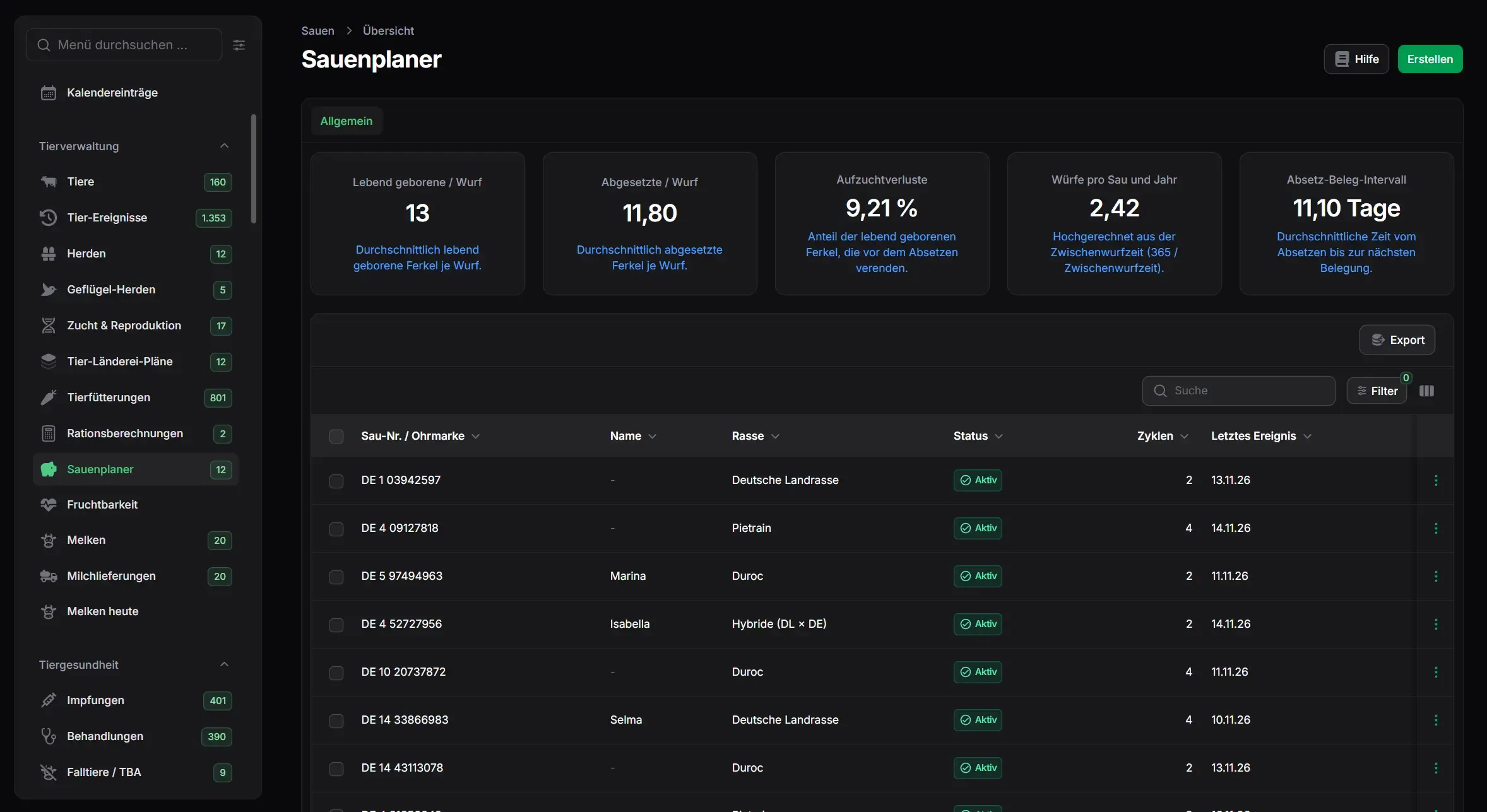
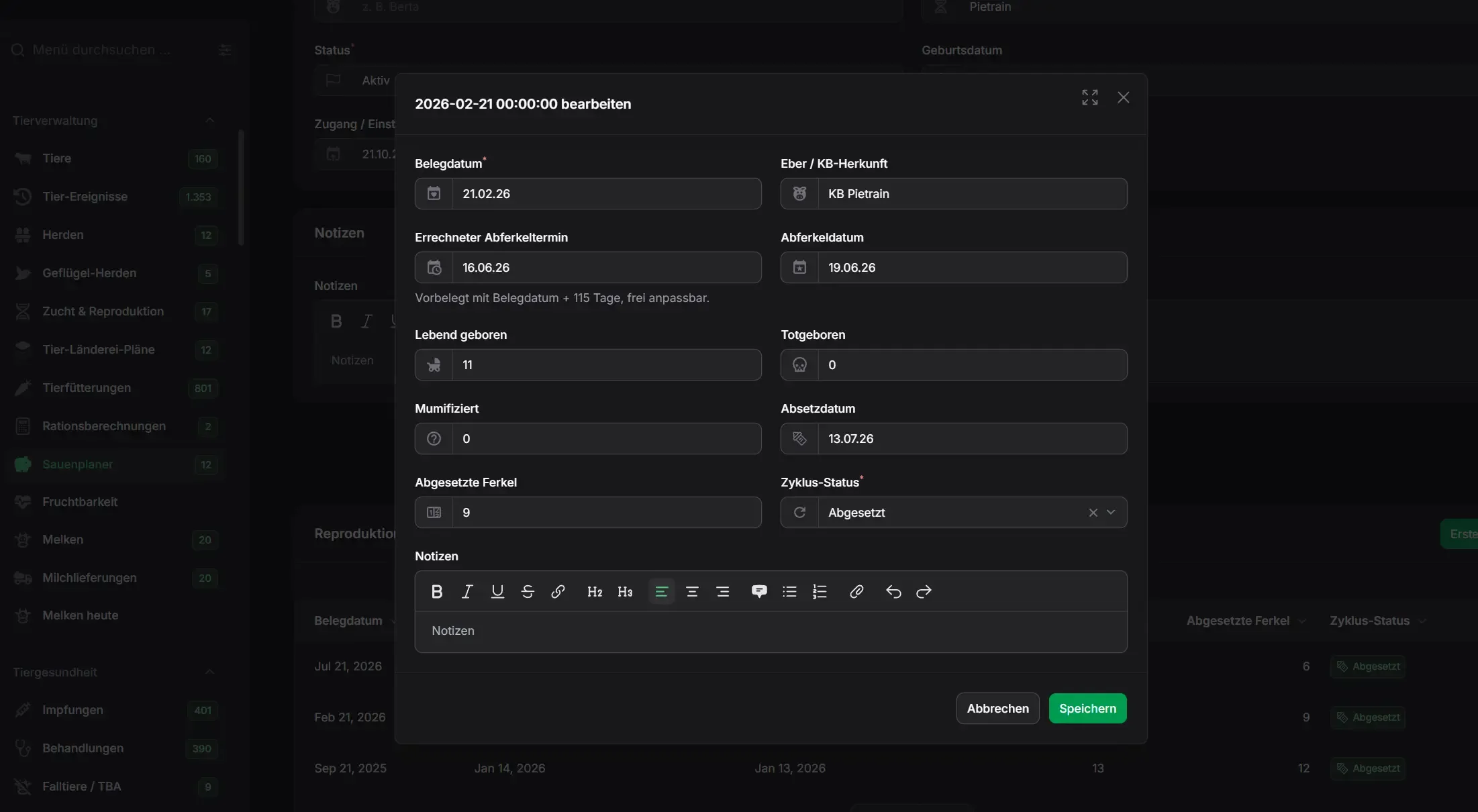
Every reproduction cycle runs through served, pregnant, farrowed and weaned; a failed service is recorded as returned to service. FarmManager pre-fills the farrowing date from the service date with 115 days of gestation. You can override it at any time.
The sow planner works without a full animal record, too. A sow can be tracked by her number alone. The sow card holds all events of a litter, from inseminations with semen batch through the pregnancy check to weaning with litter weight. The work lists show which sow is due this week for service, a check, the farrowing pen, farrowing or weaning, and they go into the barn as a PDF. You record heat, BCS and backfat per sow under “Observations”. While a sow is still nursing piglets, FarmManager does not accept a new service.
For each farrowing you record piglets born alive, stillborn and mummified plus the weaning date and the number weaned, together with litter equalisation on both sows and piglet losses by cause.
From the Business (Pro) plan, that gives piglets per litter, rearing losses as a share of those born alive, the farrowing interval, weaned piglets per sow per year, the return-to-service rate, the farrowing rate and piglet losses by cause, with recorded birth weights also the birth weight per piglet and per litter. For the most important metrics the farm sets target values of its own, and the tiles then show green, yellow or red. You can create the piglets born alive in a litter as individual animals if you wish. The litter's figures stay unchanged, and the key figures are still calculated from them.
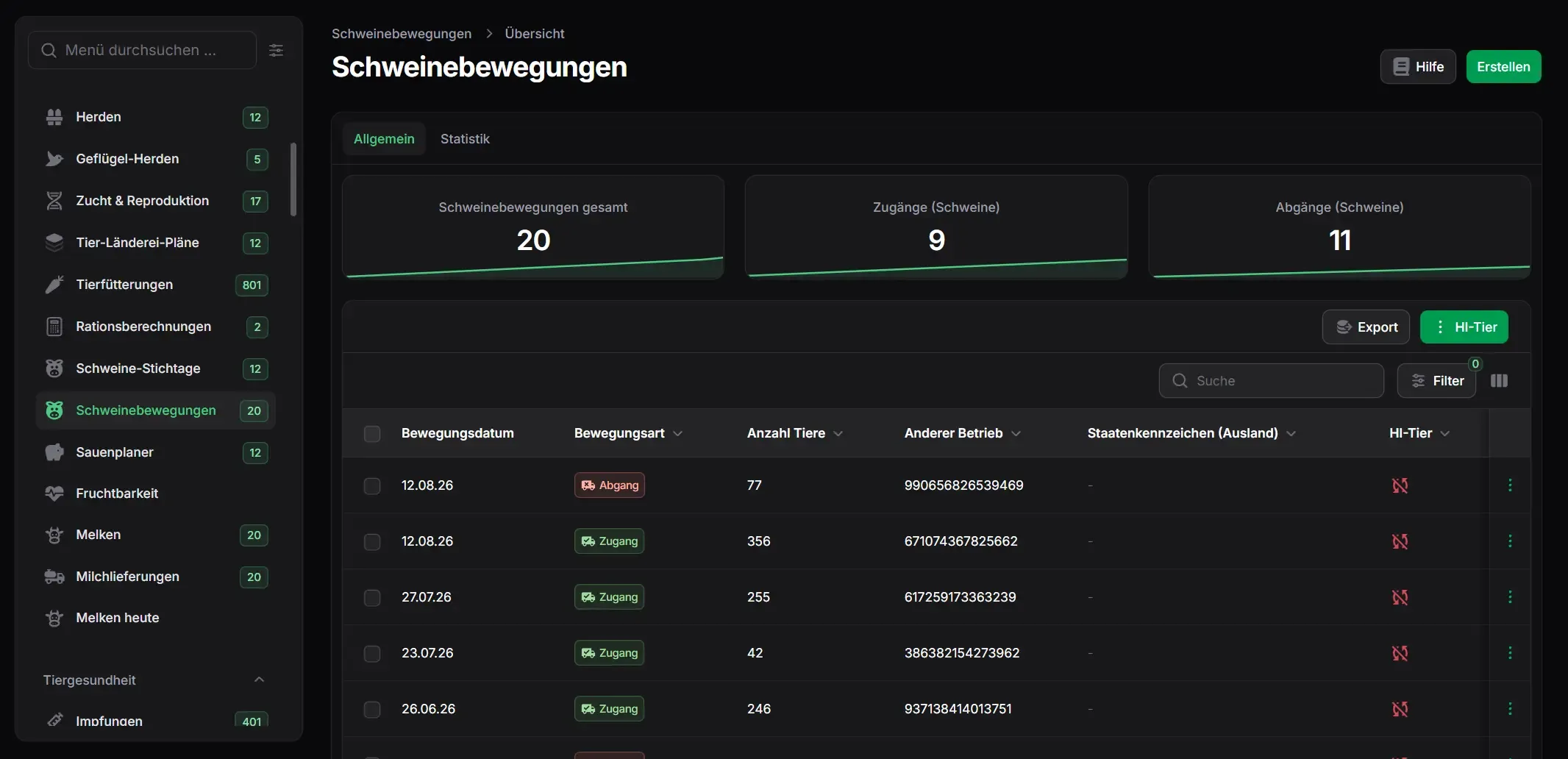
Census and movements run over the same connection as for cattle.
You keep the weekly loss list from the Farm (Basic) plan; if your farm takes part in the voluntary ASF status procedure, from the Business (Pro) plan it goes to HI-Tier as a death report, a week without losses as a nil return, so the absence of deaths is documented too. The TAM report under TAMG § 55 with the number of animals and production type also goes to HI-Tier, and FarmManager estimates the therapy frequency under § 58 locally, and it reads the authority's value from HI-Tier. Antibiotic treatments of sow and litter carry the use category breeding pigs or suckling piglets.
Weaned piglets and fattening pigs you keep as a batch with number, barn and compartment instead of animal by animal.
The weaned litters come straight from the sow planner into the batch, and how many animals are in it results from placement, purchase, transfer, sale, slaughter and death. For purchase, sale and slaughter, FarmManager creates the draft of the HI-Tier report as soon as the registration number of the other holding is entered, and a dead animal appears as fallen stock in the loss list. Batches in the barn are counted by the barn occupancy. Every morning FarmManager also checks the losses of the last seven days in farrowing area, rearing and fattening against the values of the Pig Husbandry Hygiene Ordinance. If an area is above them, it opens a clarification case with a task in which you note vet, samples and lab result.
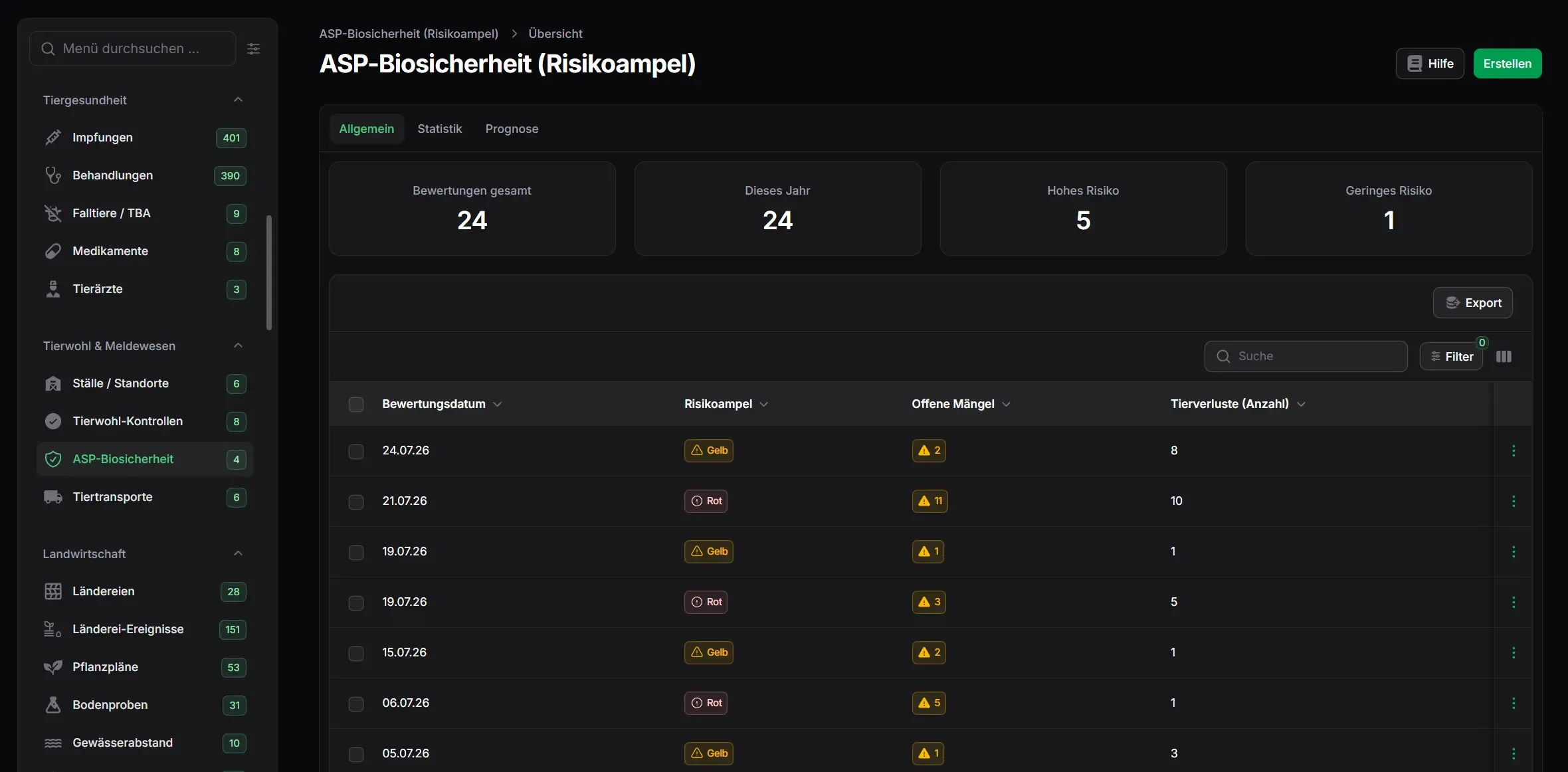
You run biosecurity checks from a fixed questionnaire, with loss documentation; the answers automatically produce a traffic-light risk rating that shows what needs attention at a glance, and a forecast names the upcoming reassessments.
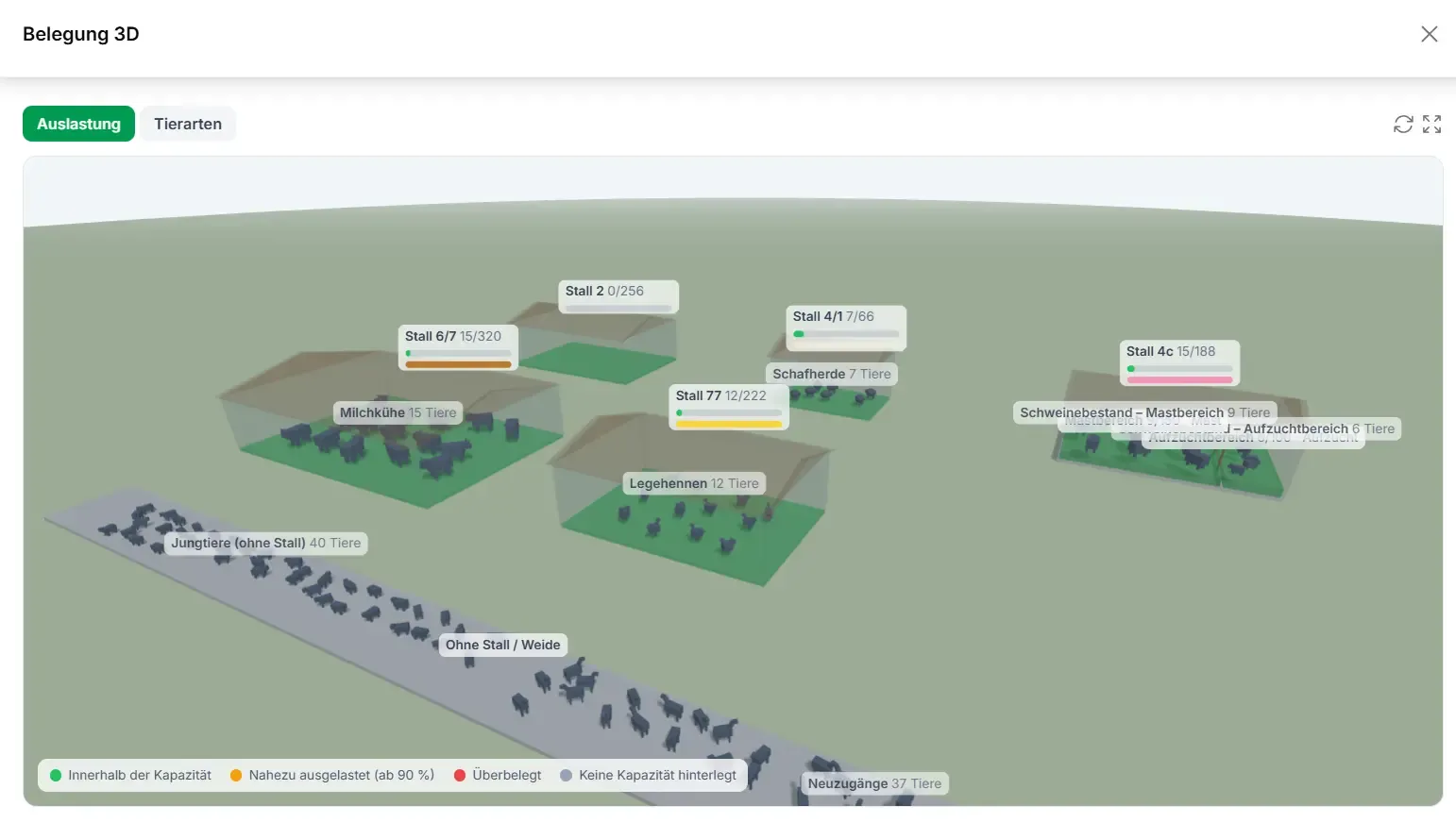
When you move animals in the 3D occupancy view, FarmManager warns if quarantined animals are about to move into an occupied area or if the herd is still inside a withdrawal period, before the move, not after.
Our Plan Recommendation
Business Pro
Litter and sow KPIs, ASF biosecurity, barns and the weekly report of dead pigs to HI-Tier (ASF status procedure) are included from the Business plan. Sow card, batches for rearing and fattening, loss records, the loss alarm, the tail docking waiver action plan, treatments and vaccinations are already in the Farm (Basic) plan.
DüV records and working hours recorded by the office are already included. The Enterprise (Premium) plan adds shift plan, time clock and payroll preparation.
Consultation and setup are free and included in every plan – from the Business (Pro) plan, connecting your machines as well.